Reading Readiness is More Than ABC

Reading readiness is a term educators may use to indicate that a child is ready to learn to read. It refers to the skills and abilities that:

  • Indicate children are ready for literacy instruction
  • Children have the essential skills they need for reading success at school.

Most children begin learning to read between the ages of 5 and 8. Some children may begin reading at the age 4. Others can take longer and it could be closer to age 9.

Primary school curricula in the early grades of school are designed to teach children to read. Children are never required to be able to read beforehand.

Promoting Literacy and Reading Readiness

Literacy of our children is key to a successful future. It is so much more than letters and sounds in books. Literacy is about language, communication, and interaction. It is about expressing our thoughts in words. The best way to promote literacy is to make it a natural part of our lives and enrich children’s lives, with:
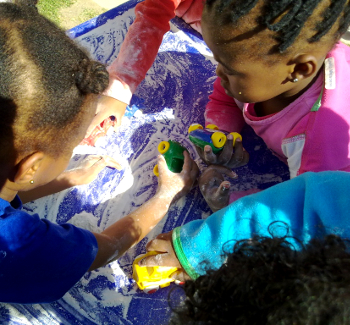
Enhancing the Ability to Read

Every day is an opportunity to engage babies, toddlers and preschoolers in developmentally appropriate play that will naturally boost reading readiness in the years to come, and promote:

Happy experiences in early childhood stimulate all the areas of the brain and build abundant synaptic connections. They help children get linguistically, physically, emotionally and cognitively ready to learn to read.
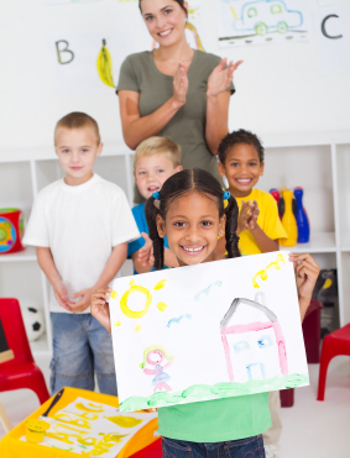
Getting Ready for Reading and Writing

Language, story time, and play naturally enhance children’s ability to read, write and spell when they start school:

  • Engaging children in conversations – talking about anything and everything in the course of each day – helps growing readers develop strong language and communication skills. Comprehension is the essence of reading.
  • Reading to children helps growing readers make connections between spoken and written language. It also promotes understanding and use of language.
  • Active, exploratory and imaginary play helps children develop cognitive structures, fine and gross motor skills and hand-eye coordination.
de Jong, Debbie, Gearing up for Grade 1 – School Readiness Assessment, S.T.A.L.K Education website, PDF Document, 2009

The Lee Pesky Learning Center, Every Child Ready to Read: Literacy Tips for Parents. New York, Ballantine Books, 2004

Likierman, H., & Muter V., Prepare Your Child for School: How to make sure your child gets off to a flying start at school. London: Vermilion Publishing, 2006

Valene, M., What Children Need to Learn to READ: The complete parent’s guide to ensuring literacy, a love of reading, and school readiness. Learners Lane Publishing, 2010

Weldon, Laua Grace, Reading Readiness Has to do with the Body, 2012

Early Experiences Shape Brain Architecture by Center on the Developing Child at Harvard University

Laura Grace Weldon Reading Readiness Has to do with the Body, 2012