
Toddler Language Development
Toddler language development is just as breathtaking as all the new adventures waiting to happen between the ages of 1 to 3. Every day brings something new as children’s communication skills develop. As they learn more words, toddlers progress from one-word and two-word utterances to simple sentences.
Young children are also developing rapidly in all the areas of development as they master new skills and the art of movement. Soon a toddler’s favourite sentence becomes:
“I do it!”
It is incredibly important to keep an eye on what these determined young explorers are doing at all times. Never underestimate the resourcefulness of an on-the-go toddler. We always need to stay a step ahead and do constant safety checks to ensure no harm can come their way.
As parents and all the caring adults we have a vital role in promoting children’s language acquisition and development.
Talking, singing, rhyming, playing and reading to children help toddlers thrive and learn to their full potential.
Promoting Toddlers’ Language Development
Toddlers acquire language by hearing the words we say while engaging in all the natural conversations of the day. Repetitions through our daily interactions promote understanding of words and encourage children to say interesting words aloud.
Busy boys and girls love learning through play. Different kinds of play activities, in the course of a balanced day, boost toddlers’ development and speech, as children:
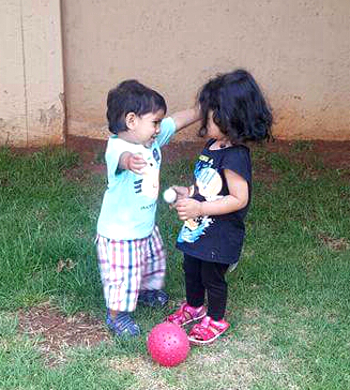
Language Development Ages 1-2
At this stage toddlers will probably be saying or attempting to say a few words. Children vary enormously. Some children might say nothing at all for a while and then suddenly come out with a full sentence. Other children will continually attempt to say a few words to communicate and make themselves understood, and gradually build up sentences.
Between the ages of 1-2, children will probably:
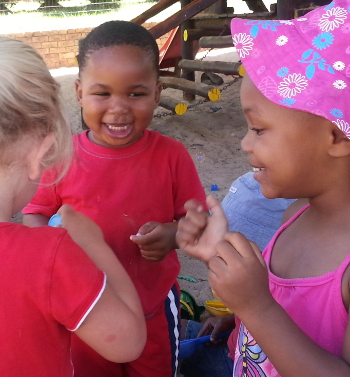
Language Development Ages 2-3
The best way to promote language is to join toddlers on their exciting adventures. Point to things and name them. Talk about the seasons, leaves on the trees, the flowers that grow, the sandcastles in the sandpit, the lovely tea party your toddler is hosting. All of this will boost children’s observation skills, vocabulary, memory and language development.
It is important to note that toddlers’ cognitive, movement skills, and understanding of language, are ahead of their ability to speak. Words are still inadequate to express their needs and feelings. This can lead to frustration in younger toddlers and lead to conflict with caring adults and other children around them. It is best to pre-empt frustrations and soothe them with love and affection by talking to children about how they feel.
Between the ages of 2-3, children will probably:
Toddler language acquisition is a wonderful and delightful adventure. Enjoy and love every moment.