Children’s Drawings Link to Early Writing
Young children are natural artists. As parents of young children, you might discover your treasured lipstick on young faces or bedroom walls.
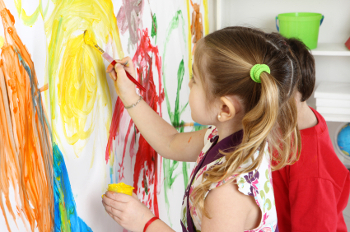
We can channel this desire to create with finger paints, chalk and crayons on paper, pavements and chalkboards.
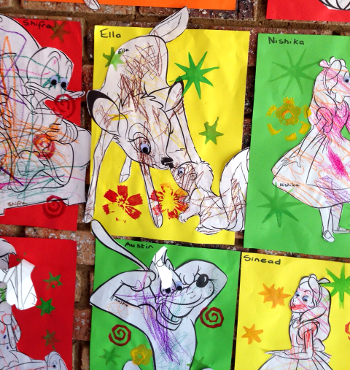
Children’s drawings are beautiful, cherish them and keep some of the favourite pictures as a memento of the awesome literacy journey. Giving children opportunities to create, draw and paint is a wonderful way to enhance early literacy and all around learning.
Children’s Drawings Change Over the Early Years
Ages 1 to 3
The first marks on paper are random and unexplained. Children gain physical pleasure from the sweeping movements and often use their whole arm when making dots and lines.
Ages 2 to 3
At this stage children learn that they are creating something that has meaning for others. Children experiment more and more.
As children develop more control over their arm movements, they can make more deliberate marks and a greater variety of lines, circles and swirls. They may also begin to draw shapes that resemble people. Often the head represents the whole body. Although children may have a range of colours to choose from, they may often choose to stick to one or two.
3-4 Years
Children now have more control over their drawing implements – crayons, paint and chalk. They can now purposefully create patterns such as crosses, shapes, circles, rectangles, triangles and lines. Children love to describe their drawings, and decorate figures that represent their favourite people and themselves with lots of interesting details.
Cutting with Scissors
From the age of three children love snipping and cutting with blunt-nosed scissors.
In order to be able to use scissors a child needs to:
Ages 4 to 6
At this stage of development children will start to use shapes consciously and combine them with lines to draw interesting and more detailed pictures that tell a story.