Learning Activities for Busy Toddlers

Toddler activities involve so many different things. For toddlers, everything is an adventure, they love:

  • To turn switches on and off, empty containers, open drawers and clear out tidy shelves – it’s how they learn about the world.
  • To experiment with all sorts of things.
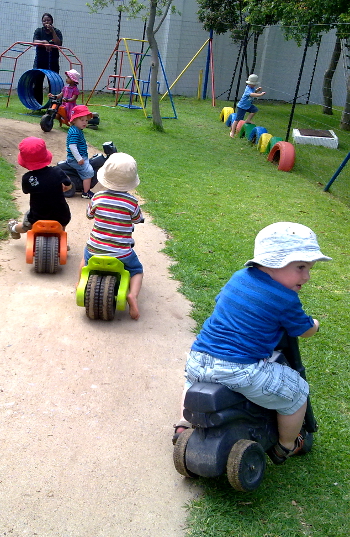
  • To climb, run away from you, ride scooters, swing, dance and explore their world.

Toddlers’ Favourite Activities

Toddlers love to be on the go. They need space and a sense of freedom to explore their world.

As toddlers tend to be fearless, always check the environment for any possible hidden dangers and do safety checks.

Toys Toddlers Love

It is often the simplest of toys that inspire toddlers’ natural curiosity: blocks, plastic buckets, toy cars and trucks of various sizes to push around, dolls to dress and undress, scooters to zoom around on, crayons and paper.

These toys allow toddlers to invent their own worlds in their activities as they learn through play.

  • Talk to toddlers while they explore and play: “Here is the blue one,” “Can you find the yellow one for me?”, “Put it in the box,” “Now it’s my turn.”
  • Turn tidying up into a game that they like to play because you make it interesting and fun.

Keeping Toddlers Busy

A toddler’s favourite sentence is: “I do it myself.” So encourage them to:

  • Play with playdough
  • Scribble, paint and draw
  • Host a tea party
  • Wash up plastic cups in warm, soapy water
  • Help with baking
  • Build a train set with blocks
  • Explore the outdoors
  • Play in the sandpit
  • Read that book again.

Dealing with Emotions

Toddlers are quick to hug, explore and have fun. There are also times when emotions can simply get better of them and lead to conflict with others.

We need to constantly observe toddlers while they play and interact with other children:
  • Reinforce positive behavior with plenty of praise
  • Recognise common pressure points when children are tired or hungry or thirsty
  • Redirect if you see a potential situation arising
  • Take a firm stand on things that really matter and are non-negotiable: their safety and unacceptable behaviour such as hitting, biting or pinching
  • Negotiate on other things. It is OK if your tiny tot wants to wear the green T-shirt rather than the red one. It is also OK to bend some rules just a little bit.
Senior, L & Hopkins K, Growing up with a Smile, Smile Education Systems (PTY) LTD, 2002
Gabbard, C & Rodrigues, L, Optimizing Early Brain Development and Motor Development Through Movement, article in Earlychildhood NEWS